Monaco's Cabinet of Curiosities: The Strange Treasures Hidden Above the Mediterranean
High above the Mediterranean, inside the Oceanographic Museum, Oceanomania gathers the world's largest cabinet of sea curiosities — a quieter, more curious side of Monaco shaped by science, exploration and wonder.
Monaco is often imagined through its most recognisable symbols: elegant hotels, superyachts, the Casino de Monte Carlo and the glittering Mediterranean coastline.
But beneath this polished image lies another Monaco, one that is quieter, more curious and deeply connected to the sea.
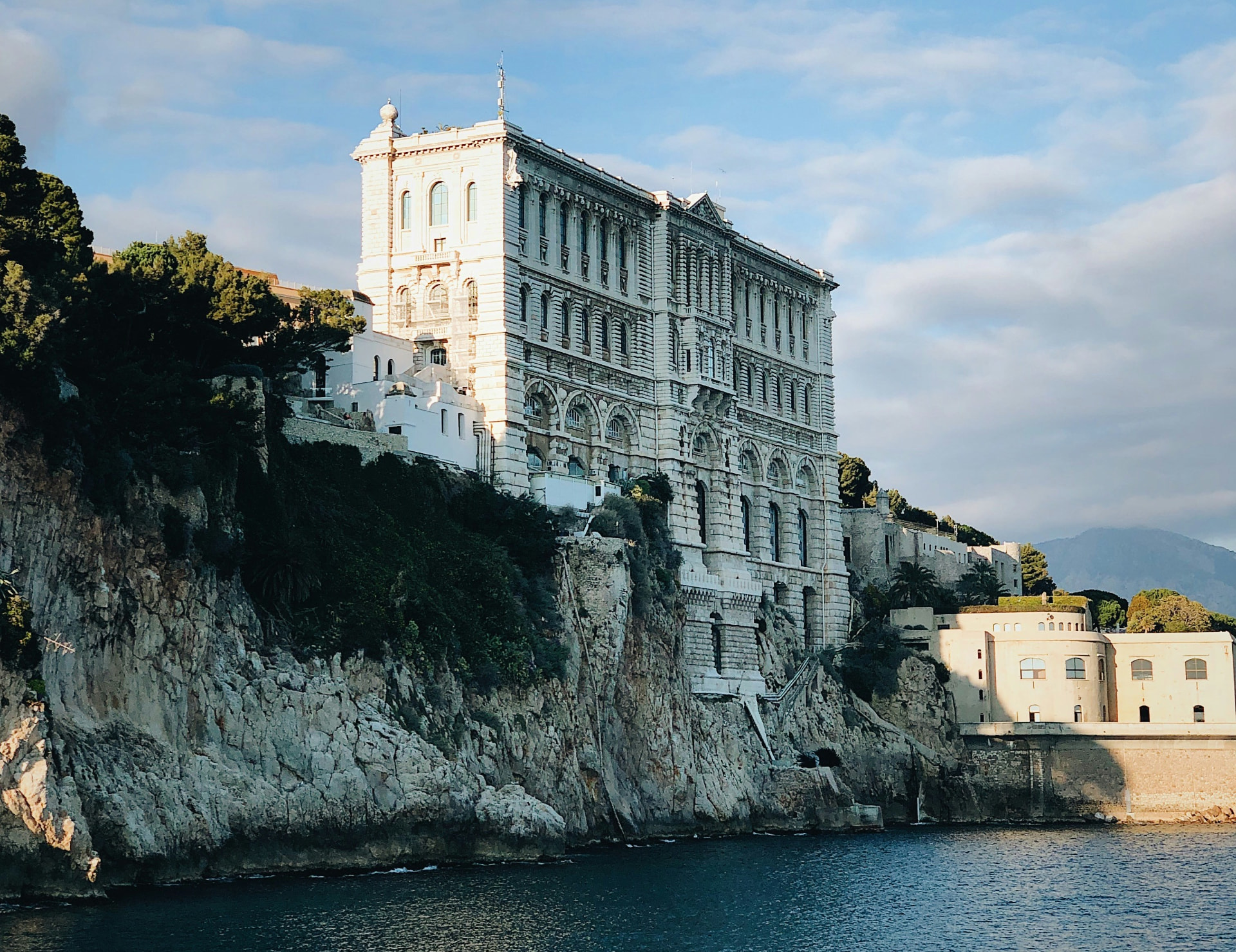
High above the Mediterranean, on the legendary Rock of Monaco, stands the Oceanographic Museum, a remarkable institution dedicated to the ocean and to humanity's fascination with it. More than an aquarium, the museum is a place where science, art, history and curiosity come together.
And hidden within this extraordinary world is something particularly fascinating: Oceanomania, an immense cabinet of sea curiosities.
A Museum Created by a Prince Fascinated by the Ocean
The story of Monaco's relationship with the sea begins with Prince Albert I, a sovereign whose interests extended far beyond the palace.
He was an explorer, scientist and passionate oceanographer who dedicated much of his life to studying the marine world. His scientific expeditions helped establish Monaco as an important centre for oceanographic research.
This passion eventually led to the creation of the Oceanographic Museum, whose architecture itself feels almost inseparable from its surroundings.
Built into the dramatic cliffs overlooking the Mediterranean, the museum appears to rise directly from the Rock.
There is something wonderfully appropriate about this location. The sea that inspired the institution is not somewhere in the distance. It is directly in front of you.
More Than an Aquarium
Walking into the Oceanographic Museum is to enter a world that extends far beyond traditional aquarium displays.
The institution's collections contain more than 60,000 scientific, naturalist, artistic and ethnological objects, bringing together different ways of understanding humanity's relationship with the ocean.
There are specimens, scientific objects, works of art and historical pieces, each telling a different part of the story.
This is what makes the museum so intriguing.
You are not simply looking at marine life.
You are discovering how generations of scientists, explorers, artists and collectors have attempted to understand, document and represent the sea.
Oceanomania: A Cabinet of Sea Curiosities
Perhaps the most intriguing part of the experience is Oceanomania, created by the artist Mark Dion.
The installation is described as the world's largest cabinet of sea curiosities, and the concept immediately transports you to another era.
Before modern museums, photography and digital archives, collectors would create cabinets of curiosities filled with remarkable objects gathered from distant places.
They were spaces of discovery, where scientific specimens, unusual natural objects and mysterious artefacts could sit side by side.
Oceanomania reimagines that tradition through the lens of the ocean.
The result is fascinating because it transforms scientific objects into something almost theatrical.
A shell is no longer simply a shell.
A specimen becomes part of a story.
An unusual object becomes an invitation to ask questions.
And suddenly, the ocean feels much larger than the water visible through the museum windows.
Curiosity as a Way of Seeing
Perhaps this is what makes Oceanomania so compelling.
The installation does not simply tell you what to think about the sea. It encourages you to become curious.
Why did someone collect this object?
Where did it come from?
What did scientists once believe about it?
How many things remain undiscovered beneath the surface?
The experience reminds us that the ocean has always inspired a particular kind of fascination.
It is beautiful, mysterious and largely unexplored.
Even in Monaco, a place so closely associated with luxury and modernity, the sea retains this sense of mystery.
A Different Side of Monaco
There is something particularly interesting about discovering this side of Monaco.
The Principality is frequently presented as a destination of glamour. Yet the Oceanographic Museum reveals a much older and more intellectual relationship with the Mediterranean.
It tells the story of a Monaco interested not only in what the sea can offer as a backdrop, but in what lies beneath its surface.
That distinction is important.
The Mediterranean is part of Monaco's visual identity, but at the Oceanographic Museum, the sea becomes the subject itself.
Science replaces spectacle.
Curiosity replaces glamour.
And exploration becomes the centre of the experience.
Above the Mediterranean, Inside Another World
Perhaps the greatest pleasure of visiting the museum is the contrast.
Outside, there is Monaco: sunlight, yachts, architecture and the deep blue Mediterranean.
Inside, there is another world entirely.
Collections, specimens and objects invite you to look closer and stay curious. The museum becomes almost a bridge between the world we know and the enormous underwater world that remains largely hidden from us.
And that is precisely why it deserves to be considered one of Monaco's more unusual treasures.
Not because it is secret.
But because it reveals a side of the Principality that many visitors might not expect to find.
The Curiosity That Remains
Monaco has perfected the art of luxury, but perhaps one of its most fascinating qualities is that it can still surprise you.
Behind the polished façades and glamorous image lies a place shaped by science, exploration and an enduring fascination with the sea.
The Oceanographic Museum captures that beautifully.
And Oceanomania takes it one step further, turning that fascination into a spectacular cabinet of curiosities.
It is a reminder that sometimes the most memorable discoveries in Monaco are not necessarily the most famous ones.
Sometimes, they are the things that simply make you stop and wonder.
Above the Mediterranean, surrounded by the elegance of Monte Carlo, Monaco keeps a collection of strange, beautiful and fascinating reminders of the ocean. All you have to do is look a little closer.
On the map
Musée Océanographique de Monaco
Avenue Saint-Martin, 98000 Monaco